
Granitoa arroka igneo mota bat da, bere erresistentzia, dentsitate, iraunkortasun eta korrosioarekiko erresistentzia handiagatik ateratzen dena. Baina granitoa oso polifazetikoa ere bada: ez da karratu eta laukizuzenetarako bakarrik! Izan ere, konfiantzaz lan egiten dugu forma, angelu eta kurba guztietako granitozko osagaiekin, aldizka, emaitza bikainak lortuz.
Gure prozesamendu modernoari esker, ebakitako gainazalak oso lauak izan daitezke. Ezaugarri hauek granitoa material aproposa bihurtzen dute neurrira egindako eta neurrira egindako diseinuko makinen oinarriak eta metrologia osagaiak sortzeko. Granitoa honako hau da:
■ mekanizagarria
■ Zehazki laua moztu eta amaitutakoan
■ herdoilaren aurkakoa
■ iraunkorra
■ iraupen luzeko
Granitozko osagaiak ere erraz garbitzen dira. Diseinu pertsonalizatuak sortzerakoan, ziurtatu granitoa aukeratzen duzula bere onura bikainak direla eta.
ESTANDARRAK / HIGADURA HANDIA DUTEN APLIKAZIOAK
ZHHIMG-k gure gainazaleko plaka estandarretarako erabiltzen duen granitoak kuartzo eduki handia du, eta horrek higadura eta kalteen aurkako erresistentzia handiagoa ematen du. Gure Superior Black koloreek ur xurgapen-tasa baxua dute, eta horrek zure zehaztasun-neurgailuak plaketan jartzean herdoiltzeko aukera gutxitzen du. ZHHIMG-k eskaintzen dituen granitoaren koloreek distira gutxiago eragiten dute, eta horrek esan nahi du plakak erabiltzen dituzten pertsonen begi-nekea txikiagoa dela. Gure granito motak aukeratu ditugu hedapen termikoa kontuan hartuta, alderdi hori ahalik eta txikiena izan dadin.
APLIKAZIO PERTSONALIZATUAK
Zure aplikazioak forma pertsonalizatuak, haridun txertaketak, zirrikituak edo bestelako mekanizazioa eskatzen duenean, Black Jinan Black bezalako material bat aukeratu beharko duzu. Material natural honek zurruntasun handiagoa, bibrazioen moteltze bikaina eta mekanizagarritasun hobea eskaintzen ditu.
Garrantzitsua da kontuan izatea kolorea bakarrik ez dela harriaren ezaugarri fisikoen adierazle. Oro har, granitoaren kolorea zuzenean lotuta dago mineralen presentziarekin edo gabeziarekin, eta horrek ez du eraginik izan gainazaleko plaka material ona egiten duten ezaugarrietan. Gainazaleko plaketarako bikainak diren granito arrosa, grisa eta beltza daude, baita doitasun aplikazioetarako guztiz desegokiak diren granito beltza, grisa eta arrosa ere. Granitoaren ezaugarri kritikoek, gainazaleko plaka material gisa erabiltzeari dagokionez, ez dute zerikusirik kolorearekin, eta hauek dira:
■ Zurruntasuna (kargaren peko deformazioa - Elastikotasun Moduluak adierazten du)
■ Gogortasuna
■ Dentsitatea
■ Higaduraren erresistentzia
■ Egonkortasuna
■ Porositatea
Granitozko material asko probatu eta alderatu ditugu. Azkenean emaitza hau lortu dugu: Jinango granito beltza ezagutu dugun material onena da. Indiako granito beltza eta Hegoafrikako granitoa Jinango granito beltzaren antzekoak dira, baina haien propietate fisikoak Jinango granito beltzarenak baino txikiagoak dira. ZHHIMGk munduan granitozko material gehiago bilatzen jarraituko du eta haien propietate fisikoak alderatuko ditu.
Zure proiekturako granito egokiari buruz gehiago hitz egiteko, jarri gurekin harremanetaninfo@zhhimg.com.
Fabrikatzaile ezberdinek estandar desberdinak erabiltzen dituzte. Munduan estandar asko daude.
DIN Araua, ASME B89.3.7-2013 edo GGG-P-463c Zehaztapen Federala (Granitozko Gainazaleko Plakak) eta abar beren zehaztapenen oinarri gisa.
Eta granitozko zehaztasun-ikuskapen plaka fabrikatu dezakegu zure beharren arabera. Jar zaitez gurekin harremanetan estandar gehiagori buruzko informazio gehiago jakin nahi baduzu.
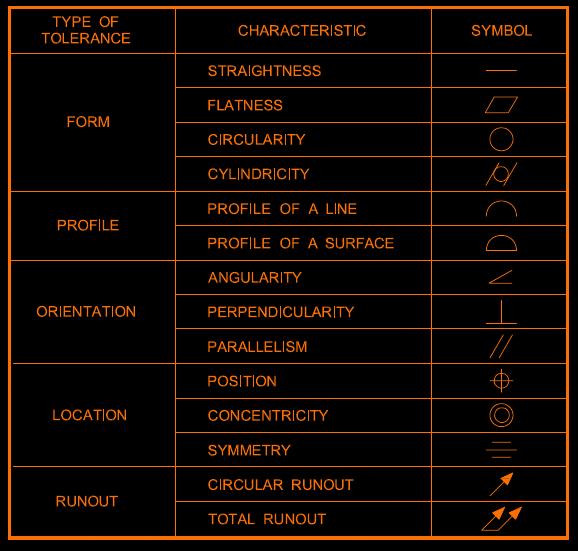
Lautasuna gainazaleko puntu guztiak bi plano paraleloren barruan daudela kontsidera daiteke, oinarrizko planoaren eta teilatuaren planoaren barruan. Planoen arteko distantziaren neurketa gainazalaren lautasun orokorra da. Lautasun neurketa honek normalean tolerantzia bat izaten du eta kalifikazioaren izendapena izan dezake.
Adibidez, hiru maila estandarren lautasun-tolerantziak zehaztapen federaletan definitzen dira, formula honen bidez zehaztuta:
■ Laborategiko mailako AA = (40 + diagonal karratua/25) x 0,000001" (aldebakarrekoa)
■ A ikuskapen maila = AA laborategiko maila x 2
■ Tresna-gela B maila = Laborategiko AA maila x 4.
Tamaina estandarreko gainazaleko plaketarako, zehaztapen honen eskakizunak gainditzen dituzten lautasun-tolerantziak bermatzen ditugu. Lautasunaz gain, ASME B89.3.7-2013 eta GGG-P-463c zehaztapen federalak honako gai hauek jorratzen dituzte: neurketa errepikakorraren zehaztasuna, gainazaleko plaken granitoen materialen propietateak, gainazalaren akabera, euskarri-puntuaren kokapena, zurruntasuna, ikuskapen-metodo onargarriak, haridun txertatzeen instalazioa, etab.
ZHHIMG granitozko gainazaleko plakek eta granitozko ikuskapen-plakek zehaztapen honetan ezarritako baldintza guztiak betetzen edo gainditzen dituzte. Gaur egun, ez dago granitozko angelu-plaken, paraleloen edo eskuadra nagusien zehaztapenik.
Eta beste estandar batzuen formulak aurki ditzakezu hemen:DESKARGATU.
Lehenik eta behin, garrantzitsua da plaka garbi mantentzea. Airean dagoen hauts urratzailea izan ohi da plaka baten higadura-iturri handiena, lan-piezetan eta neurgailuen kontaktu-gainazaletan itsatsita geratzen baita. Bigarrenik, estali plaka hautsetik eta kalteetatik babesteko. Higadura-bizitza luzatu daiteke plaka erabiltzen ez denean estaliz, plaka aldian-aldian biratuz eremu bakar batek gehiegi erabili ez dezan, eta neurgailuetako altzairuzko kontaktu-padak karburozko padekin ordezkatuz. Gainera, saihestu janaria edo freskagarriak plakan jartzea. Kontuan izan freskagarri askok azido karbonikoa edo fosforikoa dutela, eta horrek mineral bigunagoak disolbatu eta zulo txikiak utz ditzakeela gainazalean.
Hori platera nola erabiltzen den araberakoa da. Ahal bada, platera egunaren hasieran (edo lan-txandan) eta berriro amaieran garbitzea gomendatzen dugu. Platera zikintzen bada, batez ere fluido koipetsu edo itsaskorrekin, berehala garbitu beharko litzateke ziurrenik.
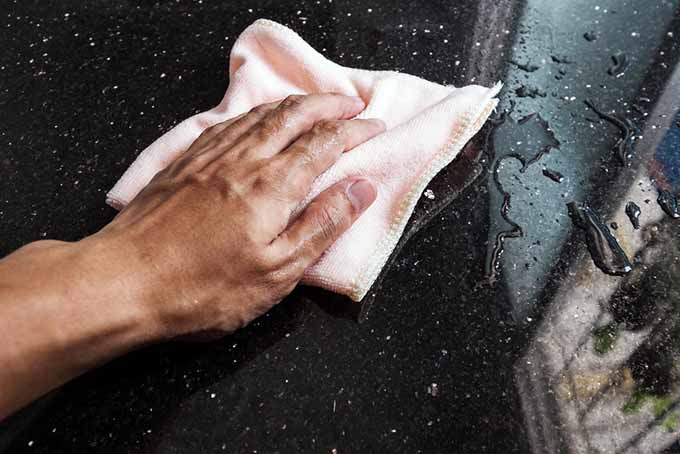
Garbitu plaka aldizka likidoarekin edo ZHHIMG ur gabeko gainazaleko plaken garbitzailearekin. Garbiketa-soluzioen aukera garrantzitsua da. Disolbatzaile lurrunkor bat erabiltzen bada (azetona, laka-mehetzailea, alkohola, etab.), lurruntzeak gainazala hoztu eta desitxuratu egingo du. Kasu honetan, plaka normalizatzen utzi behar da erabili aurretik, bestela neurketa-erroreak gertatuko dira.
Plaka normalizatzeko behar den denbora plakaren tamainaren eta hozte-kopuruaren araberakoa izango da. Ordubete nahikoa izan beharko litzateke plaka txikiagoetarako. Bi ordu behar izan daitezke plaka handiagoetarako. Uretan oinarritutako garbitzaile bat erabiltzen bada, lurruntze-hozte pixka bat ere egongo da.
Plakak ura ere atxikiko du, eta horrek gainazalarekin kontaktuan dauden metalezko piezen herdoila eragin dezake. Garbitzaile batzuek hondakin itsaskor bat uzten dute lehortu ondoren, eta horrek aireko hautsa erakarriko du, eta higadura handituko du, gutxitu beharrean.
Hori plakaren erabileraren eta ingurunearen araberakoa da. Gomendatzen dugu plaka berri bat edo granitozko osagarri zehatz bat erosi eta urtebeteko epean berriro kalibratzea. Granitozko gainazaleko plakak erabilera handia izango badu, komenigarria izan daiteke tarte hori sei hilabetera laburtzea. Maila elektroniko bat edo antzeko gailu bat erabiliz errepikatutako neurketa-erroreen hileroko ikuskapenak higadura-orbanak erakutsiko ditu eta minutu gutxi batzuk besterik ez ditu behar egiteko. Lehenengo berriro kalibrazioaren emaitzak zehaztu ondoren, kalibrazio-tartea luzatu edo laburtu daiteke, zure barne-kalitate-sistemak baimentzen edo eskatzen duen moduan.
Zure granitozko gainazaleko plaka ikuskatzen eta kalibratzen laguntzeko zerbitzua eskain dezakegu.

Hainbat arrazoi posible daude kalibrazioen arteko aldaketen kasuan:
- Gainazala disoluzio bero edo hotz batekin garbitu zen kalibrazioa egin aurretik, eta ez zitzaion denbora nahikorik eman normalizatzeko.
- Plaka gaizki euskarria dago
- Tenperatura aldaketa
- Zirriborroak
- Eguzki-argia zuzenean edo beste bero erradiatzaile bat plakaren gainazalean. Ziurtatu goiko argiak ez duela gainazala berotzen.
- Neguaren eta udaren arteko tenperatura-gradiente bertikalaren aldaketak (Ahal bada, jakin ezazu gradiente bertikalaren tenperatura kalibrazioa egiten den unean.)
- Bidalketaren ondoren, plakak ez du behar adina denborarik izan normalizatzeko
- Ikuskapen-ekipoen erabilera desegokia edo kalibratu gabeko ekipoen erabilera
- Higaduraren ondoriozko gainazaleko aldaketa
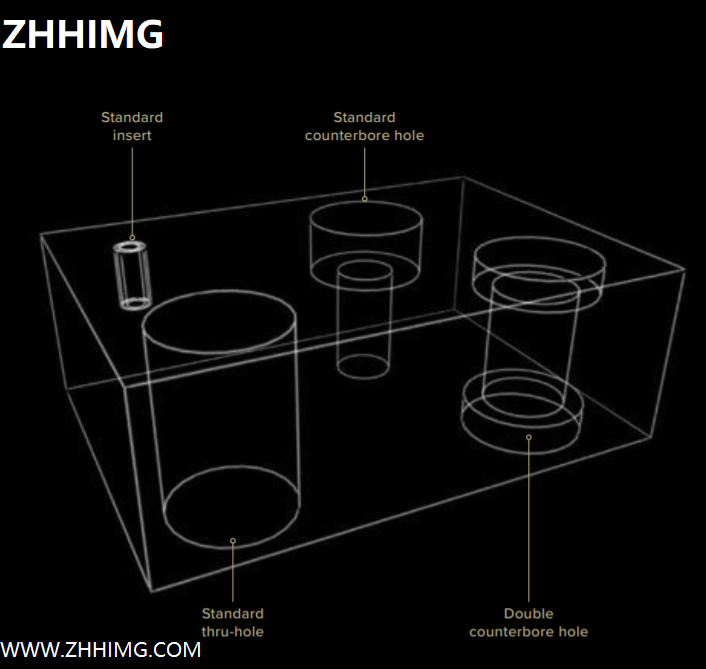
Zenbat zulo mota daude granito zehatzean?
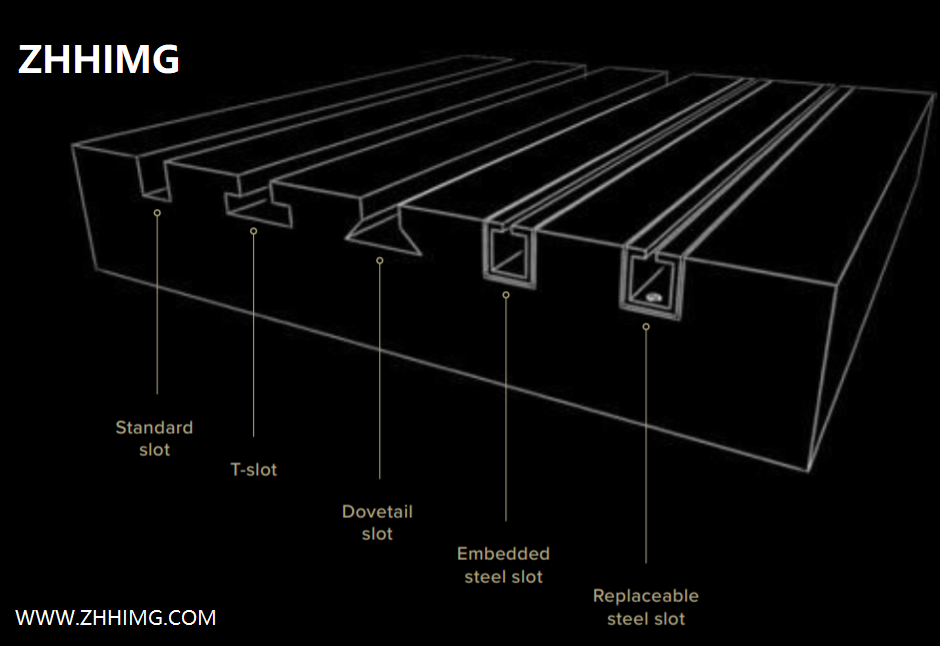
Granitozko zehaztasun-osagaien zirrikituak
Fabrika, ikuskapen-gela eta laborategi askotan, granitozko gainazal-plaka zehatzak erabiltzen dira neurketa zehatzak egiteko oinarri gisa. Neurketa lineal bakoitza erreferentzia-gainazal zehatz baten mende dagoenez, eta bertatik azken dimentsioak hartzen dira, gainazal-plakek erreferentzia-plano onena eskaintzen dute lanaren ikuskapenerako eta mekanizatu aurretik diseinurako. Altuera-neurketak egiteko eta gainazalak neurtzeko oinarri aproposak ere badira. Gainera, lautasun, egonkortasun, kalitate orokorra eta fabrikazio-maila handiak aukera ona bihurtzen dituzte neurketa-sistema mekaniko, elektroniko eta optiko sofistikatuak muntatzeko. Neurketa-prozesu horietako edozeinetarako, ezinbestekoa da gainazal-plakak kalibratuta mantentzea.
Neurketa errepikatuak eta lautasuna
Lautasuna eta errepikapen-neurketak funtsezkoak dira gainazal zehatz bat bermatzeko. Lautasuna gainazaleko puntu guztiak bi plano paraleloren barruan daudela kontsidera daiteke, oinarrizko planoaren eta teilatuaren planoaren barruan. Planoen arteko distantziaren neurketa gainazalaren lautasun orokorra da. Lautasun-neurketa honek normalean tolerantzia bat izaten du eta kalifikazio-izendapena izan dezake.
Hiru maila estandarren lautasun-tolerantziak zehaztapen federaletan definitzen dira, formula honen bidez zehaztuta:
DIN estandarra, GB estandarra, ASME estandarra, JJS estandarra... herrialde desberdinak euskarri desberdinekin...
Xehetasun gehiago estandarrari buruz.
Lautasunaz gain, errepikagarritasuna bermatu behar da. Errepikapen-neurketa tokiko lautasun-eremuen neurketa da. Plaka baten gainazaleko edozein lekutan egiten den neurketa da, adierazitako tolerantziaren barruan errepikatuko dena. Tokiko eremuaren lautasuna lautasun orokorra baino tolerantzia estuago batera kontrolatzeak gainazalaren lautasun-profilaren aldaketa mailakatua bermatzen du, eta horrela tokiko akatsak minimizatu.
Gainazaleko plaka batek lautasunaren eta neurketa errepikatuaren zehaztapenak betetzen dituela ziurtatzeko, granitozko gainazaleko plaken fabrikatzaileek GGG-P-463c zehaztapen federala erabili beharko lukete beren zehaztapenetarako oinarri gisa. Arau honek neurketa errepikatuaren zehaztasuna, gainazaleko plakaren granitoaren materialaren propietateak, gainazalaren akabera, euskarri puntuaren kokapena, zurruntasuna, ikuskapen metodo onargarriak eta haridun txertatzeen instalazioa jorratzen ditu.
Plakaren zehaztasuna egiaztatzea
Jarraibide sinple batzuk jarraituz gero, granitozko gainazaleko plaka batean egindako inbertsio batek urte asko iraun beharko luke. Plakaren erabileraren, tailerreko ingurunearen eta behar den zehaztasunaren arabera, gainazaleko plakaren zehaztasuna egiaztatzeko maiztasuna aldatu egiten da. Oro har, plaka berri batek erosketa egin eta urtebeteko epean berriro kalibratzea da. Plaka maiz erabiltzen bada, komeni da tarte hori sei hilabetera laburtzea.
Gainazaleko plaka bat zehaztapen orokorraren lautasunaren gainetik higatu baino lehen, zutoin higatu edo uhintsuak erakutsiko ditu. Hileroko ikuskapenak errepikapen-irakurketa neurgailu bat erabiliz errepikapen-neurketa erroreak detektatzeko higadura puntuak identifikatuko ditu. Errepipen-irakurketa neurgailua zehaztasun handiko tresna bat da, tokiko errorea detektatzen duena eta handitze handiko anplifikadore elektroniko batean bistara daitekeena.
Ikuskapen programa eraginkor batek autokolimadore batekin aldizkako egiaztapenak izan beharko lituzke, Estandar eta Teknologia Institutu Nazionalaren (NIST) araberako lautasun orokorraren benetako kalibrazioa eskainiz. Fabrikatzaileak edo enpresa independente batek noizean behin kalibrazio osoa egitea beharrezkoa da.
Kalibrazioen arteko aldaerak
Kasu batzuetan, gainazaleko plaken kalibrazioen artean aldaketak daude. Batzuetan, higaduraren ondoriozko gainazalaren aldaketa, ikuskapen-ekipoen erabilera okerra edo kalibratu gabeko ekipamenduen erabilera bezalako faktoreek azal dezakete aldaketa horiek. Hala ere, bi faktore ohikoenak tenperatura eta euskarria dira.
Aldagai garrantzitsuenetako bat tenperatura da. Adibidez, gainazala kalibrazioa egin aurretik soluzio bero edo hotz batekin garbitu izan daiteke eta ez zaio denbora nahikorik eman normalizatzeko. Tenperatura aldaketaren beste kausa batzuk aire hotz edo bero korronteak, eguzki-argia zuzenean, goiko argiztapena edo plakaren gainazalean dauden beste bero erradiatzaile iturri batzuk dira.
Neguaren eta udaren artean tenperatura gradiente bertikalean aldaketak ere egon daitezke. Kasu batzuetan, plakak ez du denbora nahikorik normalizatzeko bidali ondoren. Ideia ona da gradiente bertikalaren tenperatura erregistratzea kalibrazioa egiten den unean.
Kalibrazioaren aldakuntzaren beste kausa ohiko bat gaizki euskarritutako plaka bat da. Gainazaleko plaka bat hiru puntutan euskarrituta egon behar da, idealena plakaren muturretatik luzeraren % 20ra kokatuta. Bi euskarri alde luzeetatik zabaleraren % 20ra kokatu behar dira, eta gainerako euskarria erdian zentratuta egon behar da.
Hiru puntu baino ezin dira finkatu gainazal zehatz batean izan ezik. Plaka hiru puntu baino gehiagotan euskarria jartzen saiatzeak hiru punturen konbinazio desberdinetatik jasoko du euskarria, eta puntu horiek ez dira ekoizpenean euskarri izan ziren hiru puntu berberak izango. Horrek akatsak sortuko ditu plaka euskarri-antolamendu berrira egokitzeko tolesten denean. Kontuan hartu altzairuzko euskarri-euskarriak erabiltzea, euskarri-puntu egokiekin lerrokatzeko diseinatutako euskarri-habeekin. Helburu horretarako euskarriak, oro har, gainazal-plaken fabrikatzailearengandik eskuragarri daude.
Plaka behar bezala euskarria badago, mailaketa zehatza aplikazioak hala zehazten badu bakarrik da beharrezkoa. Mailaketa ez da beharrezkoa behar bezala euskarria dagoen plaka baten zehaztasuna mantentzeko.
Luzatu plakaren bizitza
Jarraibide batzuk jarraitzeak granitozko gainazaleko plakaren higadura murriztuko du eta, azken finean, bere bizitza luzatuko du.
Lehenik eta behin, garrantzitsua da plaka garbi mantentzea. Airean dagoen hauts urratzailea izan ohi da plaka baten higadura-iturri handiena, piezetan eta neurgailuen kontaktu-gainazaletan txertatzeko joera baitu.
Garrantzitsua da plakak estaltzea hautsetik eta kalteetatik babesteko. Plaka erabiltzen ez denean estaliz, iraupena luzatu daiteke.
Biratu plaka aldian-aldian, eremu bakar batek gehiegi ez erabiltzeko. Gainera, gomendagarria da neurgailuetan altzairuzko kontaktu-plakak karburozko plakekin ordezkatzea.
Saihestu janaria edo freskagarriak platerean jartzea. Freskagarri askok azido karbonikoa edo fosforikoa dute, eta horrek mineral bigunagoak disolbatu eta zulo txikiak utzi ditzake gainazalean.
Non errepikatu
Granitozko gainazaleko plaka bat berriro gainazalizatu behar denean, kontuan hartu zerbitzu hau bertan edo kalibrazio instalazioan egin behar den. Beti da hobe plaka fabrikan edo instalazio dedikatu batean berriro gainazalizatzea. Hala ere, plaka ez badago oso higatuta, normalean beharrezko tolerantziatik 0,001 hazbeteko barruan, bertan berriro gainazalizatu daiteke. Plaka bat tolerantziatik 0,001 hazbete baino gehiago kanpo geratzen den punturaino higatuta badago, edo oso zulatua edo koska badago, fabrikara bidali behar da berriro gainazalizatu aurretik leundu dezaten.
Kalibrazio instalazio batek plaka behar bezala kalibratzeko eta, beharrezkoa izanez gero, berriro lantzeko baldintza optimoak eskaintzen dituzten ekipamendua eta fabrika-ezarpena ditu.
Kontu handiz ibili behar da tokian bertan kalibratzeko eta gainazalak konpontzeko teknikari bat aukeratzerakoan. Eskatu akreditazioa eta egiaztatu teknikariak erabiliko duen ekipamenduak kalibrazio trazagarria duela. Esperientzia ere faktore garrantzitsua da, urte asko behar baitira granito zehatza behar bezala lapatzen ikasteko.
Neurketa kritikoak granitozko gainazal-plaka zehatz batekin hasten dira oinarri gisa. Behar bezala kalibratutako gainazal-plaka bat erabiliz erreferentzia fidagarria bermatuz, fabrikatzaileek neurketa fidagarriak eta kalitate hobeagoko piezak lortzeko tresna ezinbestekoenetako bat dute.Q
Kalibrazio aldaketen kontrol-zerrenda
1. Gainazala disoluzio bero edo hotz batekin garbitu zen kalibrazioa egin aurretik eta ez zitzaion denbora nahikorik eman normalizatzeko.
2. Plaka ez dago behar bezala euskarrituta.
3. Tenperatura aldaketa.
4. Zirriborroak.
5. Eguzki-argia zuzenean edo bestelako bero erradiatzailea plakaren gainazalean. Ziurtatu goiko argiak ez duela gainazala berotzen.
6. Neguaren eta udaren arteko tenperatura-gradiente bertikalaren aldaketak. Ahal bada, jakin ezazu kalibrazioa egiten den unean gradiente bertikalaren tenperatura.
7. Bidalketaren ondoren, plakak ez du behar adina denborarik izan normalizatzeko.
8. Ikuskapen-ekipoen erabilera desegokia edo kalibratu gabeko ekipoen erabilera.
9. Higaduraren ondoriozko gainazalaren aldaketa.
Teknologia aholkuak
- Neurketa lineal bakoitza azken dimentsioak hartzen diren erreferentzia-gainazal zehatz baten mende dagoenez, gainazal-plakek erreferentzia-plano onena eskaintzen dute lanaren ikuskapenerako eta mekanizatu aurretik diseinurako.
- Eremu lokalaren lautasuna lautasun orokorra baino tolerantzia estuago batekin kontrolatzeak gainazalaren lautasun-profilaren aldaketa mailakatua bermatzen du, eta horrela, tokiko akatsak minimizatu.
- Ikuskapen programa eraginkor batek autokolimadore batekin aldizkako egiaztapenak izan beharko lituzke, Ikuskapen Agintaritza Nazionalera trazagarria den lautasun orokorraren kalibrazio erreala eskainiz.
Granitoa osatzen duten mineral partikulen artean, % 90 baino gehiago feldespatoa eta kuartzoa dira, eta horien artean feldespatoa da gehienbat. Feldespatoa askotan zuria, grisa eta haragi-gorria izaten da, eta kuartzoa gehienbat koloregabea edo zuri grisaxka da, eta horiek osatzen dute granitoaren oinarrizko kolorea. Feldespatoa eta kuartzoa mineral gogorrak dira, eta zaila da altzairuzko labana batekin mugitzea. Granitoan dauden orban ilunei dagokienez, batez ere mika beltza, beste mineral batzuk ere badaude. Biotita nahiko biguna den arren, tentsioari aurre egiteko duen gaitasuna ez da ahula, eta, aldi berean, kantitate txikia dute granitoan, askotan % 10 baino gutxiago. Hau da granitoa bereziki sendoa den material-baldintza horretan.
Granitoa sendoa izatearen beste arrazoi bat da bere mineral partikulak elkarri estu lotuta daudela eta elkarren artean txertatuta daudela. Poroek askotan arrokaren bolumen osoaren % 1 baino gutxiago hartzen dute. Horrek granitoari presio handiak jasateko gaitasuna ematen dio eta hezetasunak ez du erraz zeharkatzen.
Granitozko osagaiak harriz eginda daude, herdoilik, azido eta alkali erresistenteak, higadura erresistentzia ona eta bizitza erabilgarri luzea, mantentze berezirik behar ez dutenak. Granitozko zehaztasun osagaiak gehienbat makineria industriako tresnetan erabiltzen dira. Horregatik, granitozko zehaztasun osagaiak edo granitozko osagaiak deitzen zaie. Granitozko zehaztasun osagaien ezaugarriak funtsean granitozko plataformen berdinak dira. Sarrera tresneriara eta granitozko zehaztasun osagaien neurketara: Zehaztasun mekanizazioa eta mikromekanizazio teknologia makineria fabrikazio industriaren garapen norabide garrantzitsuak dira, eta goi-mailako teknologia neurtzeko adierazle garrantzitsu bihurtu dira. Punta-puntako teknologiaren eta defentsa industriaren garapena zehaztasun mekanizaziotik eta mikromekanizazio teknologiatik bereizezina da. Granitozko osagaiak leunki irristatu daitezke neurketan, geldirik egon gabe. Lan gainazalaren neurketa, marradura orokorrek ez dute neurketaren zehaztasunean eragiten. Granitozko osagaiak eskariaren eskakizunen arabera diseinatu eta ekoitzi behar dira.
Aplikazio eremua:
Dakigunez, gero eta makina eta ekipamendu gehiagok aukeratzen dituzte granitozko osagai zehatzak.
Granitozko osagaiak mugimendu dinamikorako, motor linealetarako, cmmrako, cncrako, laser makinetarako... erabiltzen dira.
Ongi etorri gurekin harremanetan jartzera informazio gehiago lortzeko.
Granitozko neurketa-gailuak eta granitozko osagai mekanikoak kalitate handiko Jinan granito beltzez eginda daude. Beren zehaztasun handia, iraupen luzea, egonkortasun ona eta korrosioarekiko erresistentzia direla eta, gero eta gehiago erabiltzen dira produktuen ikuskapenean industria modernoan eta mekanika aeroespaziala eta ikerketa zientifikoak bezalako arlo zientifikoetan.
Abantailak
----Burdinurtua baino bi aldiz gogorragoa;
---- Dimentsio-aldaketa txikiak tenperatura-aldaketen ondorioz gertatzen dira;
----Turtu gabe, beraz, ez dago lana etenik;
---- Ale finen egitura eta itsaskortasun hutsala direla eta, ez du bizarrik edo irtengunerik, eta horrek bizitza luzean zehar lautasun maila handia bermatzen du eta ez du beste pieza edo tresnei kalterik eragiten;
---- Material magnetikoekin erabiltzeko arazorik gabeko funtzionamendua;
---- Bizitza luzea eta herdoilgaitza, mantentze-kostu txikiak lortuz.
Granitozko gainazaleko plaka zehatzak lautasun maila altuan lautzen dira zehaztasuna lortzeko, eta neurketa-sistema mekaniko, elektroniko eta optiko sofistikatuak muntatzeko oinarri gisa erabiltzen dira.
Granitozko gainazaleko plakaren ezaugarri berezi batzuk:
Gogortasunean uniformetasuna;
Zehatza karga-baldintzetan;
Bibrazioen xurgatzailea;
Erraz garbitzen da;
Bilgarriarekiko erresistentea;
Porositate baxua;
Ez-urratzailea;
Ez-magnetikoa
Granitozko gainazaleko plakaren abantailak
Lehenik eta behin, zahartze naturalaren aldi luze baten ondoren, arroka egitura uniformea, koefiziente minimoa, barne-tentsioa erabat desagertzen da, ez da deformatzen, beraz, zehaztasuna handia da.
Bigarrenik, ez da marradurarik izango, ez tenperatura konstanteetan, giro-tenperaturan ere tenperatura neurketaren zehaztasuna mantendu daiteke.
Hirugarrenik, ez da magnetizazioa, neurketa mugimendu leuna izan daiteke, kirrinkarik gabe, hezetasunak ez dio eragiten, hegazkina finkoa da.
Lau, zurruntasuna ona da, gogortasuna handia da, urraduraren aurkako erresistentzia handia da.
Bost, ez du beldurrik azidoaren, likido alkalinoen higaduraren, ez da herdoilduko, ez du oliorik margotu beharrik, ez da erraza mikro-hautsa itsasten, mantentze-lanak, erraz mantentzen da, zerbitzu-bizitza luzea.
Zergatik aukeratu granitozko oinarria burdinazko makina-ohearen ordez?
1. Granitozko makina-oinarriak burdinurtuzko makina-oinarriak baino zehaztasun handiagoa izan dezake. Burdinurtuzko makina-oinarriak tenperaturak eta hezetasunak erraz eragiten die, baina granitozko makina-oinarriak ez;
2. Granitozko makina-oinarriaren eta burdinurtuzko oinarriaren tamaina berdinarekin, granitozko makina-oinarria burdinurtua baino kostu-eraginkorragoa da;
3. Granitozko makina-oinarri berezia errazago amaitzen da burdinurtuzko makina-oinarria baino.
Granitozko gainazaleko plakak tresna garrantzitsuak dira herrialde osoko ikuskapen laborategietan. Gainazaleko plaka baten gainazal kalibratu eta oso lauak ikuskatzaileei piezen ikuskapenetarako eta tresnen kalibraziorako oinarri gisa erabiltzeko aukera ematen die. Gainazaleko plakek ematen duten egonkortasunik gabe, hainbat arlo teknologiko eta medikotan tolerantzia estua duten pieza asko askoz zailagoak izango lirateke, ezinezkoak ez badira ere, behar bezala fabrikatzea. Jakina, granitozko gainazaleko bloke bat erabiltzeko beste material eta tresnak kalibratzeko eta ikuskatzeko, granitoaren beraren zehaztasuna ebaluatu behar da. Erabiltzaileek granitozko gainazaleko plaka bat kalibratu dezakete bere zehaztasuna bermatzeko.
Garbitu granitozko gainazaleko plaka kalibrazioa egin aurretik. Bota gainazaleko plaka garbitzaile kantitate txiki bat zapi garbi eta leun batean eta garbitu granitoaren gainazala. Berehala lehortu garbitzailea gainazaleko plakaren gainean zapi lehor batekin. Ez utzi garbiketa-likidoa airean lehortzen.
Jarri neurketa-neurgailu errepikakor bat granitozko gainazaleko plakaren erdian.
Errepikapen-neurgailua granitozko plakaren gainazalera zeroan jarri.
Mugitu neurgailua poliki granitoaren gainazalean zehar. Begiratu neurgailuaren adierazlea eta erregistratu altuera-aldaketa guztien gailurrak tresna plakaren gainean mugitzen duzun bitartean.
Konparatu plakaren gainazaleko lautasun-aldaketa zure gainazaleko plakaren tolerantziekin, zeinak plakaren tamainaren eta granitoaren lautasun-mailaren arabera aldatzen diren. Kontsultatu GGG-P-463c zehaztapen federala (ikus Baliabideak) zure plakak bere tamaina eta mailarako lautasun-eskakizunak betetzen dituen zehazteko. Plakako punturik altuenaren eta punturik baxuenaren arteko aldakuntza bere lautasun-neurria da.
Egiaztatu plakaren gainazaleko sakonera-aldaketa handienak tamaina eta maila horretako plaka baten errepikagarritasun-espezifikazioen barruan daudela. Kontsultatu GGG-P-463c espezifikazio federala (ikus Baliabideak) zure plakak bere tamainarako errepikagarritasun-eskakizunak betetzen dituen zehazteko. Baztertu gainazaleko plaka puntu bakar batek ere errepikagarritasun-eskakizunak betetzen ez baditu.
Utzi erabiltzeari gobernu-baldintzak betetzen ez dituen granitozko gainazaleko plaka bat. Itzuli plaka fabrikatzaileari edo granitozko gainazalen enpresa bati blokea berriro leuntzeko, zehaztapenak betetzeko.
aholkua
Egin kalibrazio formalak gutxienez urtean behin, nahiz eta erabilera handia duten granitozko gainazaleko plakak maizago kalibratu behar diren.
Fabrikazio edo ikuskapen inguruneetan kalibrazio formal eta erregistragarria kalitate-bermeak edo kanpoko kalibrazio zerbitzuen hornitzaile batek egiten du askotan, nahiz eta edonork erabil dezakeen neurketa-neurgailu errepikakor bat gainazaleko plaka erabili aurretik modu informalean egiaztatzeko.
Granitozko gainazaleko plaken hasierako historia
Bigarren Mundu Gerra baino lehen, fabrikatzaileek altzairuzko gainazaleko plakak erabiltzen zituzten piezen ikuskapen dimentsiodunerako. Bigarren Mundu Gerran, altzairuaren beharra izugarri handitu zen, eta altzairuzko gainazaleko plaka asko urtu ziren. Ordezko bat behar zen, eta granitoa bihurtu zen aukeratutako materiala, bere propietate metrologiko hobeak zirela eta.
Granitoaren hainbat abantaila agerian geratu ziren altzairuarekiko. Granitoa gogorragoa da, hauskorragoa eta txirbiltzeko joera handiagoa izan arren. Granitoa altzairua baino askoz lauagoa eta azkarrago geruzatu daiteke. Granitoak altzairuarekin alderatuta hedapen termiko txikiagoa izateko propietate desiragarria ere badu. Gainera, altzairuzko plaka bat konpondu behar bazen, eskuz arraskatu behar zuten artisauek, eta hauek makina-erremintaren berreraikuntzan ere erabili behar zuten beren trebetasuna.
Ohar gisa, altzairuzko gainazaleko plaka batzuk gaur egun ere erabiltzen dira.
Granitozko plaken propietate metrologikoak
Granitoa sumendi-erupzioek sortutako arroka igneoa da. Alderatuz gero, marmola kareharri metamorfizatua da. Metrologian erabiltzeko, hautatutako granitoak GGG-P-463c zehaztapen federalean (hemendik aurrera Fed Specs deituko da) azaltzen diren baldintza espezifikoak bete behar ditu, eta zehazki, 3.1 3.1 zatia. Fed Specs-en artean, granitoak ehundura fina edo ertaina izan behar du.
Granitoa material gogorra da, baina bere gogortasuna hainbat arrazoirengatik aldatzen da. Granitozko plaka teknikari esperientziadun batek gogortasuna kalkula dezake bere kolorearen arabera, eta hori kuartzo edukiaren adierazle da. Granitoaren gogortasuna kuartzo edukiaren kantitateak eta mika faltak definitzen duten propietatea da. Granito gorriak eta arrosak izan ohi dira gogorrenak, grisak gogortasun ertainekoak dira eta beltzak bigunenenak.
Young-en Elastikotasun Modulua harriaren malgutasuna edo gogortasunaren adierazle gisa erabiltzen da. Granito arrosak batez beste 3-5 puntu ditu eskalan, grisak 5-7 puntu eta beltzak 7-10 puntu. Zenbakia zenbat eta txikiagoa izan, orduan eta gogorragoa izan ohi da granitoa. Zenbakia zenbat eta handiagoa izan, orduan eta bigunagoa eta malguagoa da granitoa. Garrantzitsua da granitoaren gogortasuna ezagutzea tolerantzia-mailetarako behar den lodiera eta gainean jartzen diren piezen eta neurgailuen pisua aukeratzerakoan.
Garai batean, benetako mekanizatzaileak zeudenean, alkandora-poltsikoetan zituzten taula trigonometrikoen liburuxkengatik ezagunak, granito beltza "Onena" zela uste zen. Onena higaduraren aurkako erresistentzia handiena ematen zuena edo gogorragoa zen mota bezala definitzen zen. Desabantaila bat da granito gogorragoek errazago pitzatu edo kolpatu egiten dutela. Mekanizatzaileak hain konbentzituta zeuden granito beltza zela onena, ezen granito arrosa fabrikatzaile batzuek beltzez tindatu baitzituzten.
Nik neuk ikusi dut biltegitik ateratzean sardexka batetik eroritako plaka bat. Plaka lurrera jo eta bi zatitan zatitu zen, benetako kolore arrosa agerian utziz. Kontuz ibili Txinatik granito beltza erosteko asmoa baduzu. Gomendatzen dizugu zure dirua beste modu batean xahutzea. Granitozko plaka baten gogortasuna alda daiteke bere baitan. Kuartzo-marra bat gainazaleko plakaren gainerakoa baino askoz gogorragoa izan daiteke. Gabro beltz geruza batek eremu bat askoz bigunagoa bihur dezake. Gainazaleko plaken konponketa-teknikari ondo prestatu eta esperientziadunek badakite nola kudeatu eremu bigun hauek.
Gainazaleko plakaren kalifikazioak
Lau gainazaleko plaka mota daude. Laborategiko AA eta A maila, Gela Ikuskapeneko B maila, eta laugarrena Tailerreko Maila. AA eta A mailak dira lauenenak, 0,00001 hazbete baino lautasun-tolerantzia hobearekin AA mailako plakarentzat. Tailerreko mailak dira gutxien lauak eta izenak dioen bezala, tresna-geletan erabiltzeko pentsatuta daude. AA, A eta B mailak, berriz, ikuskapen edo kalitate-kontroleko laborategi batean erabiltzeko pentsatuta daude.
PGainazaleko plakaren kalibraziorako probak
Beti esan diet nire bezeroei edozein 10 urteko haur atera dezakedala nire elizatik eta egun gutxitan plaka bat nola probatu irakatsi diezaiokedala. Ez da zaila. Teknika batzuk behar dira zeregina azkar egiteko, denborarekin eta errepikapen askorekin ikasten diren teknikak. Jakinarazi behar dizuet, eta ezin dut nahikoa azpimarratu, Fed Spec GGG-P-463c EZ dela kalibrazio prozedura bat! Horri buruz gehiago geroago.
Fed Espezifikazioen arabera, lautasun orokorraren (batez besteko panela) eta errepikagarritasunaren (lokalizatutako higadura) egiaztapenen kalibrazioa ezinbestekoa da. Salbuespen bakarra errepikagarritasuna baino ez da beharrezkoa plaka txikiekin gertatzen.
Era berean, eta beste probak bezain kritikoa, gradiente termikoen proba da. (Ikus beheko Delta T)
1. irudia
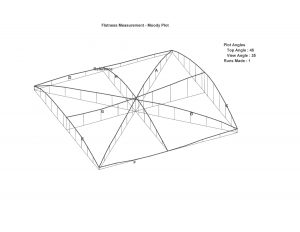
Lautasun-probak 4 metodo onartu ditu. Maila elektronikoak, autokolimazioa, laserra eta plano-lokalizatzaile izeneko gailu bat. Maila elektronikoak soilik erabiltzen ditugu, hainbat arrazoirengatik metodorik zehatzena eta azkarrena direlako.
Laserrek eta autokolimadoreek argi-izpi oso zuzen bat erabiltzen dute erreferentzia gisa. Granitozko gainazaleko plaka baten zuzentasunaren neurketa bat egiten da gainazaleko plakaren eta argi-izpiaren arteko distantziaren aldaketa alderatuz. Argi-izpi zuzen bat hartu eta islatzaile-helburu batean joz, islatzaile-helburua gainazaleko plakan behera mugitzen den bitartean, igorritako izpiaren eta itzulera-izpiaren arteko distantzia zuzentasunaren neurketa bat da.
Hona hemen metodo honen arazoa. Helburua eta iturria bibrazioak, giro-tenperaturak, helburu laua ez izateak edo urratuak izateak, aireko kutsadurak eta airearen mugimenduak (korronteak) eragiten dituzte. Horiek guztiek errorearen osagai gehigarriak eragiten dituzte. Gainera, autokolimadore batekin egindako egiaztapenetatik operadorearen errorearen ekarpena handiagoa da.
Autokolimadorearen erabiltzaile esperientziadun batek neurketa oso zehatzak egin ditzake, baina oraindik ere arazoak izaten ditu irakurketen koherentziarekin, batez ere distantzia luzeetan, islapenak zabaldu edo lausotu egiten baitira. Gainera, helburu guztiz laua ez izateak eta lentearen bidez begiratzeko egun luze batek errore gehigarriak sortzen ditu.
Plano-lokalizatzaile gailu bat ergela da. Gailu honek erreferentzia gisa zuzen samarra den puntu bat erabiltzen du (argi-izpi kolimatu edo laser izpi oso zuzen batekin alderatuta). Gailu mekanikoak 20 u hazbeteko bereizmena duen adierazle bat erabiltzen du, baina barraren zuzentasun ezak eta materialen desberdintasunak neurketa-erroreak nabarmen handitzen dituzte. Gure ustez, metodoa onargarria den arren, inongo laborategi eskudunek ez luke plano-lokalizatzaile gailurik erabiliko azken ikuskapen-tresna gisa.
Maila elektronikoek grabitatea erabiltzen dute erreferentzia gisa. Maila elektroniko diferentzialak ez dira bibrazioen eraginpean egoten. 0,1 arku segundoko bereizmena dute eta neurketak azkarrak eta zehatzak dira, eta operadore esperientziadun batek akats gutxi eragiten du. Ez plano-lokalizatzaileek ez autokolimatoreek ez dute gainazalaren ordenagailuz sortutako grafiko topografikoak (1. irudia) edo isometrikoak (2. irudia) eskaintzen.
2. irudia
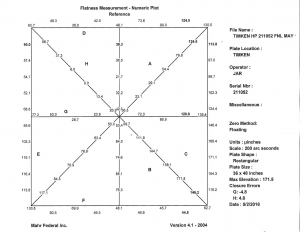
Gainazalaren lautasun egokiaren proba
Gainazalaren lautasun egokia duen proba hain zati garrantzitsua da artikulu honen aldetik, ezen hasieran jarri beharko nukeen. Aurretik esan bezala, Fed Spec. GGG-p-463c EZ DA kalibrazio metodo bat. Metrologia mailako granitoaren alderdi askotarako gida gisa balio du, eta erosle potentziala Gobernu Federalaren Agentzia bat da, eta horrek probak egiteko metodoak eta tolerantziak edo mailak barne hartzen ditu. Kontratista batek Fed Specs-ak bete dituela dioenez, lautasun balioa Moody metodoaren bidez zehaztuko da.
Moody 50eko hamarkadan hasi zen lanean, eta metodo matematiko bat asmatu zuen lautasun orokorra zehazteko eta lerroen orientazioa kontuan hartzeko, plano berean nahikoa hurbil dauden ala ez jakiteko. Ez da ezer aldatu. Allied Signal-ek metodo matematikoa hobetzen saiatu zen, baina ondorioztatu zuen aldeak hain txikiak zirela, ezen ez zela merezi ahalegina egitea.
Gainazaleko plaken kontratista batek maila elektronikoak edo laserra erabiltzen baditu, ordenagailu bat erabiltzen du kalkuluekin laguntzeko. Ordenagailuaren laguntzarik gabe, autokolimazioa erabiltzen duen teknikariak eskuz kalkulatu behar ditu irakurketak. Egia esan, ez dute egiten. Denbora gehiegi behar du eta, egia esan, erronka handiegia izan daiteke. Moody metodoa erabiltzen duen lautasun-proba batean, teknikariak Union Jack konfigurazioko zortzi lerro probatzen ditu zuzentasuna egiaztatzeko.
Metodo umoretsua
Moody metodoa zortzi lerroak plano berean dauden zehazteko modu matematiko bat da. Bestela, 8 lerro zuzen besterik ez dituzu, plano berean edo plano berean egon daitezkeenak edo ez. Gainera, Fed Spec-ekin bat datorrela dioen eta autokolimazioa erabiltzen duen kontratista batek...beharzortzi datu-orrialde sortu. Markatutako lerro bakoitzeko orrialde bana, bere probak, konponketak edo biak frogatzeko. Bestela, kontratistak ez du ideiarik zein den benetako lautasun-balioa.
Ziur nago autokolimazioa erabiliz plakak kontratista batek kalibratzen dituen horietakoa bazara, ez dituzula inoiz orrialde horiek ikusi! 3. irudia adibide bat dabat bakarrikZortzi orrialdeko orrialdea beharrezkoa da lautasun orokorra kalkulatzeko. Ezjakintasun eta gaiztakeria horren adierazle bat da zure txostenak zenbaki biribildu politak baditu. Adibidez, 200, 400, 650, etab. Behar bezala kalkulatutako balioa zenbaki erreala da. Adibidez, 325,4 u In. Kontratistak Moody metodoa erabiltzen duenean eta teknikariak balioak eskuz kalkulatzen dituenean, zortzi orrialdeko kalkuluak eta grafiko isometrikoa jaso beharko zenituzke. Grafiko isometrikoak lerro desberdinetan zehar dauden altuera aldakorrak eta hautatutako gurutzaketa puntuak zenbat distantziatan bereizten diren erakusten du.
3. irudia(Zortzi orrialde behar dira honelako lautasuna eskuz kalkulatzeko. Ziurtatu galdetzen duzula zergatik ez duzun hau lortzen zure kontratistak autokolimazioa erabiltzen badu!)
4. irudia
Dimensional Gauge teknikariek maila diferentzialak (4. irudia) erabiltzen dituzte gailu hobetsi gisa neurketa-estazio batetik bestera angelu-aldaketa txikiak neurtzeko. Mailek 0,1 arku-segundoko bereizmena dute (5 u hazbete 4 hazbeteko lera erabiliz), oso egonkorrak dira, ez diete eragiten bibrazioek, neurtutako distantzien, aire-korronteen, operadorearen nekearen, airearen kutsaduraren edo beste gailu batzuek dituzten arazoen. Gehitu ordenagailuaren laguntza, eta zeregina nahiko azkarra bihurtzen da, egiaztapena eta, batez ere, konponketa frogatzen duten grafiko topografikoak eta isometrikoak sortuz.
Errepikagarritasun Proba Egokia
Errepikapen-irakurketa edo errepikagarritasuna da probarik garrantzitsuena. Errepikapen-proba egiteko erabiltzen dugun ekipamendua errepikapen-irakurketa gailu bat, LVDT bat eta bereizmen handiko irakurketetarako beharrezkoa den anplifikadore bat dira. LVDT anplifikadorea 10 u hazbeteko edo 5 u hazbeteko gutxieneko bereizmenera ezartzen dugu zehaztasun handiko plaketarako.
20 u hazbeteko bereizmena duen adierazle mekaniko bat erabiltzeak ez du ezertarako balio 35 u hazbeteko errepikagarritasun-eskakizun bat probatu nahi baduzu. Adierazleek 40 u hazbeteko ziurgabetasuna dute! Irakurketa errepikatuaren konfigurazioak altuera-neurgailu/pieza konfigurazio bat imitatzen du.
Errepikagarritasuna EZ DA lautasun orokorraren (batez besteko planoaren) berdina. Granitoan errepikagarritasuna erradio neurketa koherente gisa ikustea gustatzen zait.
5. irudia
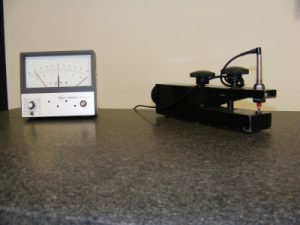
Bola biribil baten errepikagarritasuna probatzen baduzu, bolaren erradioa ez dela aldatu frogatu duzu. (Behar bezala konpondutako plaka baten profil idealak ganbil koroatu forma du.) Hala ere, agerikoa da bolak ez duela laua. Beno, nolabait. Distantzia oso laburrean, laua da. Ikuskapen lan gehienek piezatik oso gertu dagoen altuera neurgailu bat erabiltzen dutenez, errepikagarritasuna granitozko plaka baten propietate kritikoena bihurtzen da. Garrantzitsuagoa da lautasun orokorra baino, erabiltzaileak pieza luze baten zuzentasuna egiaztatzen ez badu behintzat.
Ziurtatu zure kontratistak irakurketa errepikatu bat egiten duela. Plaka batek tolerantziatik kanpo irakurketa errepikatu bat izan dezake, baina hala ere lautasun proba gainditu! Harrigarria bada ere, laborategi batek irakurketa errepikatu bat barne hartzen ez duten probetan akreditazioa lor dezake. Konpondu ezin duen edo konpontzen oso ona ez den laborategi batek lautasun probak soilik egitea nahiago du. Lautasuna gutxitan aldatzen da plaka mugitu ezean.
Errepikapen-irakurketa probak errazenak dira probatzeko, baina zailena lortzeko lapatzean. Ziurtatu zure kontratistak errepikagarritasuna berreskura dezakeela gainazala "zimurtu" edo gainazalean olatuak utzi gabe.
Delta T testa
Proba honek harriaren benetako tenperatura goiko eta beheko gainazalean neurtzea eta aldea, Delta T, kalkulatzea dakar, ziurtagirian txostena emateko.
Garrantzitsua da granitoaren hedapen termikoaren batez besteko koefizientea 3,5 uIn/Hz/gradu dela jakitea. Inguruko tenperaturak eta hezetasunak granitozko plaka batean duten eragina hutsala da. Hala ere, gainazaleko plaka bat tolerantziatik kanpo egon daiteke edo batzuetan hobetu, nahiz eta 0,3 – 0,5 gradu F-ko Delta T-an egon. Jakin behar da Delta T azken kalibrazioarekiko diferentzialaren 0,12 gradu F-ren barruan dagoen.
Garrantzitsua da jakitea plaka baten lan-gainazala berorantz migratzen dela. Goiko tenperatura behekoa baino beroagoa bada, goiko gainazala igotzen da. Beheko tenperatura beroagoa bada, eta hori arraroa da, goiko gainazala hondoratzen da. Kalitate-kudeatzaile edo teknikari batentzat ez da nahikoa plaka laua eta errepikagarria dela jakitea kalibrazio edo konponketa unean, baizik eta zein zen bere Delta T azken kalibrazio-proba unean. Egoera kritikoetan, erabiltzaileak, Delta T berak neurtuz, zehaztu dezake plaka tolerantziatik kanpo dagoen Delta T aldakuntzen ondorioz soilik. Zorionez, granitoak ordu asko edo egunak behar ditu ingurune batera egokitzeko. Egunean zehar giro-tenperaturaren gorabehera txikiek ez dute eraginik izango. Arrazoi hauengatik, ez dugu giro-kalibrazioko tenperatura edo hezetasuna jakinarazten, efektuak hutsalak direlako.
Granitozko plakaren higadura
Granitoa altzairuzko plakak baino gogorragoa den arren, granitoak orban sakonak garatzen ditu gainazalean. Piezen eta neurgailuen gainazaleko mugimendu errepikakorrak dira higadura-iturri handiena, batez ere eremu bera etengabe erabiltzen bada. Plaka baten gainazalean geratzen den zikinkeriak eta ehotze-hautsa higadura-prozesua bizkortzen dute, piezen edo neurgailuen eta granitoaren gainazalaren artean sartzen direnean. Piezak eta neurgailuak gainazalean zehar mugitzean, hauts urratzailea izan ohi da higadura gehigarriaren eragilea. Oso gomendagarria da etengabe garbitzea higadura murrizteko. Egunero UPS paketeen bidalketek plaken gainean jarrita eragindako higadura ikusi dugu plaken gainean! Higadura-eremu lokalizatu horiek kalibrazio-errepikagarritasun-proben irakurketetan eragina dute. Saihestu higadura aldizka garbituz.
Granitozko plaken garbiketa
Plaka garbi mantentzeko, erabili oihal itsaskor bat harea kentzeko. Sakatu oso arin, kola-hondakinak ez uzteko. Ondo erabilitako oihal itsaskor batek oso lan ona egiten du ehotzeko hautsa garbiketa-faseen artean jasotzeko. Ez lan egin leku berean. Mugitu zure muntaketa plakaren inguruan, higadura banatuz. Ondo dago alkohola erabiltzea plaka garbitzeko, baina kontuan izan horrek gainazala aldi baterako hoztuko duela. Xaboi pixka bat duen ura bikaina da. Merkataritza-eskuragarri dauden garbitzaileak, hala nola Starrett-en garbitzailea, ere bikainak dira erabiltzeko, baina ziurtatu xaboi-hondakin guztiak kentzen dituzula gainazaletik.
Granitozko plaken konponketa
Argi egon beharko litzateke orain gainazaleko plakaren kontratistak kalibrazio egokia egiten duela ziurtatzearen garrantzia. "Dei bakarrarekin egin dena" programak eskaintzen dituzten "Clearing House" motako laborategiek gutxitan izaten dute konponketak egin ditzakeen teknikaririk. Konponketak eskaintzen badituzte ere, ez dute beti gainazaleko plaka tolerantziatik kanpo dagoenean behar den esperientzia duen teknikaririk izaten.
Plaka bat higadura handia dela eta konpondu ezin daitekeela esaten badizute, deitu iezaguzu. Seguruenik konponketa egin dezakegu.
Gure teknikariek urtebete eta erdiko ikastunaldia egiten dute Gainazaleko Plaken Teknikari Maisu baten agindupean. Gainazaleko Plaken Teknikari Maisu bat ikastunaldia amaitu eta gainazaleko plaken kalibrazioan eta konponketan hamar urte baino gehiagoko esperientzia duen norbait bezala definitzen dugu. Dimensional Gauge-n hiru Teknikari Maisu ditugu lanean, 60 urte baino gehiagoko esperientziarekin batera. Gure Teknikari Maisuetako bat uneoro dago eskuragarri laguntza eta orientazioa emateko egoera zailak sortzen direnean. Gure teknikari guztiek esperientzia dute tamaina guztietako gainazaleko plaken kalibrazioetan, txikietatik oso handietaraino, ingurumen-baldintza desberdinetan, industria desberdinetan eta higadura-arazo larrietan.
Fed Specs-ek 16 eta 64ko batez besteko zimurtasun aritmetiko (AA) arteko akabera-eskakizun espezifikoa dute. Guk 30-35 AA arteko akabera nahiago dugu. Zimurtasun nahikoa dago piezak eta neurgailuak leunki mugitzeko eta gainazaleko plakari itsatsi edo bihurritu ez daitezen ziurtatzeko.
Konpontzen dugunean, plaka behar bezala muntatuta eta mailakatuta dagoela ikuskatzen dugu. Lapaketa lehorra erabiltzen dugu, baina granitoa asko kentzea eskatzen duen higadura handiko kasuetan, lapaketa hezea erabiltzen dugu. Gure teknikariek eurek garbitu ondoren egiten dute lan, sakonak, azkarrak eta zehatzak dira. Hori garrantzitsua da, granitozko plakaren zerbitzuaren kostuak zure geldialdi eta ekoizpen galdua barne hartzen dituelako. Konponketa egoki bat oso garrantzitsua da, eta ez zenuke inoiz kontratista bat aukeratu behar prezioaren edo erosotasunaren arabera. Kalibrazio lan batzuek oso trebatutako pertsonak behar dituzte. Hori dugu.
Azken Kalibrazio Txostenak
Gainazaleko plaken konponketa eta kalibrazio bakoitzerako, txosten profesional zehatzak eskaintzen ditugu. Gure txostenek informazio kritiko eta garrantzitsu ugari dute. Fed Spec.-ek guk emandako informazio gehiena eskatzen du. Beste kalitate-arau batzuetan jasotakoak izan ezik, hala nola ISO/IEC-17025, txostenen gutxieneko Fed. Specs-ak hauek dira:
- Tamaina oinetan (X' x X')
- Kolorea
- Estiloa (Erlaitzik gabeko edo bi edo lau erlaitz dituenari egiten dio erreferentzia)
- Elastikotasun Modulu Estimatua
- Batez besteko planoaren tolerantzia (mailaren/tamainaren arabera zehaztuta)
- Irakurketa errepikatuaren tolerantzia (hazbeteko diagonalaren luzeraren arabera zehaztuta)
- Batez besteko planoa aurkitu bezala
- Batez besteko planoa ezkerrean
- Errepikatu irakurketa aurkitu bezala
- Errepikatu irakurketa ezkerreko moduan
- Delta T (goiko eta beheko gainazalen arteko tenperatura diferentziala)
Teknikariak gainazaleko plakan lautzea edo konponketa lanak egin behar baditu, kalibrazio-ziurtagiriarekin batera, konponketa baliozkoa dela frogatzeko grafiko topografiko edo isometriko bat aurkeztuko da.
ISO/IEC-17025 egiaztagiriei eta horiek dituzten laborategiei buruzko hitz batzuk
Laborategi batek gainazaleko plaken kalibrazioan akreditazioa izateak ez du zertan esan nahi badakiela zer egiten ari den, are gutxiago ondo egiten ari denik! Ezta laborategiak konpondu dezakeenik ere. Akreditazio-erakundeek ez dute bereizketarik egiten egiaztapenaren edo kalibrazioaren (konponketaren) artean.Aeta bat ezagutzen dut, agian2akreditazio-erakundeakLgorbataATxakurraren inguruan zinta jarriko banu nahikoa diru ordainduko banie! Egia tristea da. Laborategiek hiru probetatik bat bakarrik eginez lortu duten akreditazioa ikusi dut. Gainera, ziurgabetasun errealistekin lortu duten laborategiek akreditazioa eta balioak nola kalkulatu dituzten frogarik edo erakustaldirik gabe lortu dute. Zoritxarrekoa da hori guztia.
batuketa
Ezin da gutxietsi granitozko plaken zehaztasun-eginkizuna. Granitozko plakek ematen duten erreferentzia laua da gainerako neurketa guztiak egiteko oinarria.
Neurketa-tresna modernoenak, zehatzenak eta moldakorrenak erabil ditzakezu. Hala ere, neurketa zehatzak zailak dira erreferentziazko gainazala laua ez bada. Behin, bezero potentzial batek esan zidan: "Beno, harri hutsa da!". Nire erantzuna: "Ados, arrazoi duzu, eta ezin duzu justifikatu adituak zure gainazaleko plakak mantentzeko etortzea".
Prezioa ez da inoiz arrazoi ona gainazaleko plaken kontratistak aukeratzeko. Erosleek, kontulariek eta kalitate-ingeniari kopuru kezkagarri batek ez dute beti ulertzen granitozko plakak berriro ziurtatzea ez dela mikrometro, kalibre edo DMM bat berriro ziurtatzea bezalakoa.
Tresna batzuek espezializazioa behar dute, ez prezio baxua. Hori esanda, gure tarifak oso arrazoizkoak dira. Batez ere lana behar bezala egiten dugula ziurtatzeko. ISO-17025 eta Espezifikazio Federalen eskakizunak baino askoz haratago goaz balio erantsian.
Gainazaleko plakak dimentsio-neurketa askoren oinarria dira, eta neurketaren zehaztasuna bermatzeko, gainazaleko plaka behar bezala zaintzea ezinbestekoa da.
Granitoa da gainazaleko plaketarako erabiltzen den material ezagunena, dituen ezaugarri fisiko idealengatik, hala nola gainazaleko gogortasuna eta tenperatura-gorabeherekiko sentikortasun txikia. Hala ere, etengabe erabiltzen direnean, gainazaleko plakek higadura jasaten dute.
Lautasuna eta errepikagarritasuna funtsezko alderdiak dira plaka batek neurketa zehatzak lortzeko gainazal zehatza eskaintzen duen ala ez zehazteko. Bi alderdien tolerantziak GGG-P-463C, DIN, GB, JJS... espezifikazio federalaren arabera definitzen dira. Lautasuna plakaren punturik altuenaren (teilatuaren planoa) eta punturik baxuenaren (oinarrizko planoa) arteko distantziaren neurketa da. Errepikagarritasunak zehazten du eremu batetik hartutako neurketa bat plaka osoan zehar errepika daitekeen adierazitako tolerantziaren barruan. Horrek bermatzen du plakan ez dagoela gailurrik edo haranik. Irakurketak adierazitako jarraibideen barruan ez badaude, baliteke gainazala berriro aldatu behar izatea neurketak espezifikazioetara itzultzeko.
Gainazaleko plaken kalibrazio erregularra beharrezkoa da lautasuna eta denboran zehar errepikagarritasuna bermatzeko. Cross-eko neurketa zehatzen taldeak ISO 17025 ziurtagiria du gainazaleko plaken lautasunaren eta errepikagarritasunaren kalibraziorako. Mahr Gainazaleko Plaken Ziurtagiri Sistema erabiltzen dugu, honako hauek barne hartzen dituena:
- Aldarte eta Profilaren Analisia,
- Diagrama isometrikoak edo zenbakizkoak,
- Batez besteko lasterketa anitzak, eta
- Industriako estandarren araberako kalifikazio automatikoa.
Mahr Ordenagailuz Lagundutako Ereduak maila absolutuarekiko edozein desbideratze angeluar edo lineal zehazten du, eta aproposa da gainazaleko plaken profilaketa oso zehatzerako.
Kalibrazioen arteko tarteak aldatu egingo dira erabilera-maiztasunaren, plaka dagoen ingurumen-baldintzen eta zure enpresaren kalitate-eskakizun espezifikoen arabera. Zure gainazaleko plaka behar bezala mantentzeak kalibrazio bakoitzaren artean tarte luzeagoak izatea ahalbidetu dezake, berriro leuntzearen kostu gehigarria saihesten laguntzen dizu eta, batez ere, plakan lortzen dituzun neurketak ahalik eta zehatzenak direla ziurtatzen du. Gainazaleko plakak sendoak diruditen arren, zehaztasun-tresnak dira eta hala tratatu behar dira. Hona hemen zure gainazaleko plaken zaintzari dagokionez kontuan hartu beharreko gauza batzuk:
- Mantendu platera garbi, eta ahal bada estali erabiltzen ez duzunean.
- Neurtu beharreko neurgailuak edo piezak izan ezik, ez da ezer jarri behar plakan.
- Ez erabili plateraren puntu bera beti.
- Ahal bada, biratu plaka aldian-aldian.
- Errespetatu zure plateraren karga-muga
Granitozko oinarri zehatzak makina-erremintaren errendimendua hobetu dezake
Oro har, ingeniaritza mekanikoan eta makina-erremintaren eraikuntzan etengabe handitzen ari dira eskakizunak. Kostuak handitu gabe zehaztasun eta errendimendu maximoa lortzea lehiakorrak izateko etengabeko erronkak dira. Makina-erremintaren ohea faktore erabakigarria da hemen. Hori dela eta, gero eta makina-erreminta fabrikatzaile gehiagok granitoan oinarritzen dira. Bere parametro fisikoengatik, altzairuarekin edo polimero hormigoiarekin lortu ezin diren abantaila argiak eskaintzen ditu.
Granitoa arroka bolkaniko sakona deritzon egitura oso trinkoa eta homogeneoa du, hedapen-koefiziente oso baxua, eroankortasun termiko baxua eta bibrazio-amortiguazio handia duena.
Jarraian, granitoa goi-mailako koordenatuen neurketa-makinetarako oinarri gisa soilik egokia dela dioen uste orokorra zergatik den zaharkituta, eta zergatik den makina-erremintetarako oinarri gisa material natural hau altzairuaren edo burdinurtuaren alternatiba oso abantailagarria, baita zehaztasun handiko makina-erremintetarako ere.
Mugimendu dinamikorako granitozko osagaiak, motor linealetarako granitozko osagaiak, NDTrako granitozko osagaiak, X izpietarako granitozko osagaiak, CMMrako granitozko osagaiak, CNCrako granitozko osagaiak, laserrerako granitozko zehaztasuna, aeroespazialetarako granitozko osagaiak, zehaztasun-etapetarako granitozko osagaiak... fabrikatu ditzakegu.
Balio Erantsi Handia Kostu Gehigarririk Gabe
Granitoaren erabilera gero eta handiagoa ingeniaritza mekanikoan ez da hainbeste altzairuaren prezioaren igoera izugarriagatik gertatzen. Aitzitik, granitoz egindako makina-ohe batekin lortzen den makina-erremintaren balio erantsia kostu gehigarri oso txikiarekin edo batere gabe lor daitekeelako da. Hori frogatzen dute Alemaniako eta Europako makina-erreminta fabrikatzaile ezagunen kostuen alderaketek.
Granitoak ahalbidetzen duen termodinamika-egonkortasunean, bibrazioen moteltzean eta epe luzerako zehaztasunean lortutako irabazi handia ezin da lortu burdinurtuzko edo altzairuzko ohe batekin, edo kostu nahiko altuan bakarrik. Adibidez, errore termikoek makina baten errore osoaren % 75eraino eragin dezakete, eta konpentsazioa software bidez saiatzen da askotan, arrakasta moderatuarekin. Bere eroankortasun termiko baxua dela eta, granitoa da epe luzerako zehaztasunerako oinarri hobea.
1 μm-ko tolerantziarekin, granitoak erraz betetzen ditu DIN 876 arauaren araberako lautasun-eskakizunak 00 zehaztasun-mailarentzat. 1etik 10era bitarteko gogortasun-eskalan 6ko balioarekin, oso gogorra da, eta 2,8 g/cm³-ko pisu espezifikoarekin ia aluminioaren baliora iristen da. Horrek abantaila gehigarriak ere baditu, hala nola, aurrerapen-abiadura handiagoak, ardatz-azelerazio handiagoak eta ebaketa-makina-erremintentzako erremintaren bizitza luzatzea. Horrela, ohe galdatu batetik granitozko makina-ohe batera aldatzeak makina-erreminta goi-mailako klasera eramaten du zehaztasunari eta errendimenduari dagokionez, kostu gehigarririk gabe.
Granitoaren aztarna ekologiko hobetua
Altzairua edo burdinurtua bezalako materialen aldean, harri naturala ez da energia handiarekin eta gehigarriekin ekoitzi behar. Energia kantitate nahiko txikiak baino ez dira behar harrobiak ateratzeko eta gainazalen tratamendurako. Horrek aztarna ekologiko hobea sortzen du, makina baten bizitzaren amaieran ere altzairuarena baino handiagoa dena. Granitozko ohea makina berri baten oinarria izan daiteke edo helburu guztiz desberdinetarako erabil daiteke, hala nola errepideak eraikitzeko txikitzeko.
Ez dago granitorako baliabide eskasirik. Lurrazaleko magmatik sortutako arroka sakona da. Milioi urtez "heldu" da eta kantitate handietan dago eskuragarri baliabide natural gisa ia kontinente guztietan, Europa osoan barne.
Ondorioa: Granitoak altzairuarekin edo burdinurtuarekin alderatuta dituen abantaila frogagarri ugariek justifikatzen dute ingeniari mekanikoek gero eta borondate handiagoa izatea material natural hau zehaztasun handiko eta errendimendu handiko makina-erremintetarako oinarri gisa erabiltzeko. Granitoaren propietateei buruzko informazio zehatza, makina-erremintetarako eta ingeniaritza mekanikorako abantailagarriak direnak, artikulu honetan aurki daiteke.
Errepikapen-neurketa tokiko lautasun-eremuen neurketa da. Errepikapen-neurketaren zehaztapenak dio plaka baten gainazaleko edozein lekutan hartutako neurketa adierazitako tolerantziaren barruan errepikatuko dela. Tokiko eremuaren lautasuna lautasun orokorra baino zorrotzago kontrolatzeak gainazalaren lautasun-profilaren aldaketa mailakatua bermatzen du, eta horrela tokiko akatsak minimizatuz.
Fabrikatzaile gehienek, inportatutako markak barne, lautasun-tolerantzien espezifikazio federalari eusten diote, baina askok ez dituzte errepikapen-neurketak kontuan hartzen. Gaur egun merkatuan dauden balio baxuko edo aurrekontu baxuko plaka askok ez dute errepikapen-neurketak bermatzen. Errepikapen-neurketak bermatzen ez dituen fabrikatzaile batek EZ ditu ASME B89.3.7-2013 edo GGG-P-463c espezifikazio federalaren, edo DIN 876, GB, JJS... eskakizunak betetzen dituzten plakak ekoizten.
Biak dira funtsezkoak neurketa zehatzak egiteko gainazal zehatza bermatzeko. Lautasunaren zehaztapena ez da nahikoa neurketaren zehaztasuna bermatzeko. Adibidez, hartu 36 X 48 Ikuskapen Mailako A gainazaleko plaka bat, 0,000300"-ko lautasunaren zehaztapena BAKARRIK betetzen duena. Egiaztatzen ari den piezak hainbat gailur gainditzen baditu eta erabiltzen ari den neurgailua puntu baxu batean badago, neurketa-errorea tolerantzia osoa izan daiteke eremu batean, 0,00300"! Egia esan, askoz handiagoa izan daiteke neurgailua malda baten gainean badago.
0,000600"-0,000800"-ko erroreak gerta daitezke, maldaren larritasunaren eta erabiltzen den neurgailuaren besoaren luzeraren arabera. Plaka honek 0,000050"FIR-ko Neurketa Errepikatzailearen zehaztapena balu, neurketa-errorea 0,000050" baino txikiagoa izango litzateke, plakan neurketa non egiten den kontuan hartu gabe. Beste arazo bat, normalean teknikari ez-trebatu batek plaka bat in situ gainazalez berriztatzen saiatzen denean sortzen dena, Neurketa Errepikatzaileak bakarrik erabiltzea da plaka bat ziurtatzeko.
Errepikagarritasuna egiaztatzeko erabiltzen diren tresnak EZ daude diseinatuta lautasun orokorra egiaztatzeko. Gainazal kurbatu perfektu batean zeroan jartzen direnean, zero irakurtzen jarraituko dute, gainazal hori guztiz laua, ahurra edo ganbila izan 1/2"-koa izan! Gainazalaren uniformetasuna egiaztatzen dute besterik gabe, ez lautasuna. Lautasun zehaztapena ETA errepikapen neurketaren zehaztapena betetzen dituen plaka batek bakarrik betetzen ditu benetan ASME B89.3.7-2013 edo GGG-P-463c zehaztapen federalaren eskakizunak.
Ask us about or flatness specification and repeat measurement promise by calling +86 19969991659 or emailing INFO@ZHHIMG.COM
Bai, baina tenperatura-gradiente bertikal espezifiko baterako bakarrik berma daitezke. Plakan hedapen termikoak duen eraginak erraz eragin dezake zehaztasun-aldaketa tolerantzia baino handiagoa, gradientean aldaketa bat badago. Kasu batzuetan, tolerantzia nahikoa estua bada, goiko argiztapenetik xurgatutako beroak gradiente-aldaketa nahikoa eragin dezake hainbat ordutan zehar.
Granitoak gutxi gorabehera 0,0000035 hazbeteko hedapen termikoaren koefizientea du hazbeteko 1 °F-ko. Adibidez: 36" x 48" x 8"-ko gainazaleko plaka batek 0,000075"-ko zehaztasuna du (AA mailakoaren 1/2) 0 °F-ko malda batean, goiko aldea eta beheko aldea tenperatura berean daude. Plakaren goiko aldea beheko aldea baino 1 °F beroago dagoen punturaino berotzen bada, zehaztasuna 0,000275" ganbila izatera aldatuko litzateke! Beraz, Laborategiko AA mailakoa baino tolerantzia estuagoa duen plaka bat eskatzea klima-kontrol egokia badago bakarrik kontuan hartu behar da.
Gainazaleko plaka bat 3 puntutan eutsi behar da, idealena plakaren muturretatik luzeraren % 20ra kokatuta. Bi euskarri alde luzeetatik zabaleraren % 20ra kokatu behar dira, eta gainerako euskarria erdian. 3 puntu bakarrik eutsi daitezke sendo gainazal zehatz batean izan ezik.
Plaka puntu hauetan euskarri behar da ekoizpenean zehar, eta hiru puntu hauetan bakarrik euskarri behar da erabiltzen den bitartean. Plaka hiru puntu baino gehiagotan euskarritzen saiatzeak hiru punturen konbinazio desberdinetatik jasoko du euskarria, eta ez dira ekoizpenean euskarri zen 3 puntu berberak izango. Horrek akatsak sortuko ditu plaka euskarri-antolamendu berrira egokitzeko tolesten denean. Zhhimg altzairuzko euskarri guztiek euskarri-habeak dituzte, euskarri-puntu egokiekin lerrokatzeko diseinatuta.
Plaka behar bezala euskarria badago, mailaketa zehatza zure aplikazioak hala eskatzen badu bakarrik da beharrezkoa. Mailaketa ez da beharrezkoa behar bezala euskarritutako plaka baten zehaztasuna mantentzeko.
Zergatik aukeratu granitoaMakina OinarriaketaMetrologia Osagaiak?
Ia aplikazio guztietarako erantzuna "bai" da. Granitoaren abantailak hauek dira: ez du herdoilik edo korrosiorik, ia deformazioarekiko immunea da, ez du koska konpentsatzailerik koska egiten denean, iraupen luzeagoa du, ekintza leunagoa da, zehaztasun handiagoa du, ia ez-magnetikoa da, hedapen termikoaren koefiziente baxua du eta mantentze-kostu txikia du.
Granitoa arroka igneo mota bat da, bere erresistentzia, dentsitate, iraunkortasun eta korrosioarekiko erresistentzia handiagatik ateratzen dena. Baina granitoa oso polifazetikoa ere bada: ez da karratu eta laukizuzenetarako bakarrik! Izan ere, Starrett Tru-Stone-k konfiantzaz lan egiten du granitozko osagaiekin, forma, angelu eta kurba guztietako aldaeretan diseinatuta, aldizka, emaitza bikainak lortuz.
Gure prozesamendu modernoari esker, ebakitako gainazalak oso lauak izan daitezke. Ezaugarri hauek granitoa material aproposa bihurtzen dute neurrira egindako eta neurrira egindako diseinuko makinen oinarriak eta metrologia osagaiak sortzeko. Granitoa honako hau da:
mekanizagarria
zehatz-mehatz laua moztu eta amaitutakoan
herdoilaren aurkakoa
iraunkorra
iraupen luzeko
Granitozko osagaiak ere erraz garbitzen dira. Diseinu pertsonalizatuak sortzerakoan, ziurtatu granitoa aukeratzen duzula bere onura bikainak direla eta.
ESTANDARRAK/ HIGADURA HANDIKO APLIKAZIOAK
ZhongHui-k gure gainazaleko plaka estandarretarako erabiltzen duen granitoak kuartzo eduki handia du, eta horrek higadura eta kalteen aurkako erresistentzia handiagoa ematen du. Gure Superior Black eta Crystal Pink koloreek ur xurgapen tasa baxuak dituzte, eta horrek zure zehaztasun neurgailuak plaketan jartzean herdoiltzeko aukera gutxitzen du. ZhongHui-k eskaintzen dituen granitoaren koloreek distira gutxiago eragiten dute, eta horrek esan nahi du plakak erabiltzen dituzten pertsonen begi-nekea txikiagoa dela. Gure granito motak aukeratu ditugu hedapen termikoa kontuan hartuta, alderdi hori ahalik eta txikiena izan dadin.
APLIKAZIO PERTSONALIZATUAK
Zure aplikazioak forma pertsonalizatuak, haridun txertaketak, zirrikituak edo bestelako mekanizazioa eskatzen duenean, Black Diabase bezalako material bat aukeratu beharko duzu. Material natural honek zurruntasun handiagoa, bibrazioen moteltze bikaina eta mekanizagarritasun hobea eskaintzen ditu.
Bai, oso higatuak ez badaude. Gure fabrikako ezarpenak eta ekipamenduak baldintza optimoak ahalbidetzen dituzte plakaren kalibrazio egokia egiteko eta, beharrezkoa izanez gero, berriro lantzeko. Oro har, plaka bat beharrezko tolerantziaren barruan badago, bertan gainazala berriro eman dakioke. Plaka bat tolerantziatik kanpo 0,001 hazbete baino gehiago badago, edo oso zulatua edo koska badago, fabrikara bidali beharko da artezteko, berriro leundu aurretik.
Kontu handiz ibili behar da kalibrazio eta gainazal berritzeko teknikari bat aukeratzerakoan. Kontuz ibiltzeko eskatzen dizugu kalibrazio zerbitzua aukeratzerakoan. Eskatu akreditazioa eta egiaztatu teknikariak erabiliko duen ekipamenduak Ikuskapen Erakunde Nazionalaren kalibrazio trazagarria duela. Urte asko behar dira granito zehatza behar bezala lapatzen ikasteko.
ZhongHuik gure fabrikan egindako kalibrazioetarako erantzun azkarra eskaintzen du. Ahal bada, bidali zure plakak kalibratzera. Zure kalitatea eta ospea zure neurketa-tresnen zehaztasunaren araberakoak dira, gainazaleko plakak barne!
Gure gainazaleko plaka beltzek dentsitate nabarmen handiagoa dute eta hiru aldiz zurrunagoak dira. Beraz, beltzez egindako plaka batek ez du zertan tamaina bereko granitozko plaka bat bezain lodi izan behar deformazioarekiko erresistentzia berdina edo handiagoa izateko. Lodiera txikiagoak pisu txikiagoa eta bidalketa-kostu txikiagoak esan nahi du.
Kontuz lodiera bereko kalitate baxuko granito beltza erabiltzen dutenekin. Goian esan bezala, granitoaren propietateak, egurraren edo metalaren antzera, materialaren eta kolorearen arabera aldatzen dira, eta ez dira zurruntasunaren, gogortasunaren edo higadura-erresistentziaren adierazle zehatzak. Izan ere, granito beltz eta diabasa mota asko oso bigunak dira eta ez dira egokiak gainazaleko plaketarako aplikazioetarako.
Ez. Elementu hauek berriro lantzeko beharrezkoak diren ekipamendu eta prestakuntza espezializatuak fabrikara itzuli behar dira kalibratzeko eta berriro lantzeko.
Bai. Zeramikaz eta granitoz antzeko ezaugarriak dituzte, eta granitoa kalibratzeko eta lapatzeko erabiltzen diren metodoak zeramikazko elementuekin ere erabil daitezke. Zeramika granitoa baino zailagoa da lapatzen, eta ondorioz, kostu handiagoa.
Bai, baldin eta txertaketak gainazalaren azpian hondoratuta badaude. Altzairuzko txertaketak gainazaleko planoarekin berdinduta edo gainetik badaude, plaka gainjarri aurretik, puntuz behera leundu behar dira. Beharrezkoa bada, zerbitzu hori eman dezakegu.
Bai. Nahi den hariarekin (ingelesa edo metrikoa) altzairuzko txertaketak epoxi bidez itsatsi daitezke plakan nahi diren kokapenetan. ZhongHuik CNC makinak erabiltzen ditu txertaketa kokapen estuenak +/- 0,005"-ren barruan eskaintzeko. Txertaketa kritiko gutxiagoetarako, haridun txertaketetarako gure kokapen-tolerantzia ±,060" da. Beste aukera batzuk granitoan zuzenean mekanizatutako altzairuzko T barrak eta enara-buztan zirrikituak dira.
Epoxi erresistente handiko eta lan oneko txertaketek torsio- eta zizaila-indar handia jasango dute. Duela gutxi egindako proba batean, 3/8"-16 haridun txertaketak erabiliz, laborategi independente batek epoxi-loturadun txertaketa bat gainazaleko plaka batetik ateratzeko behar den indarra neurtu zuen. Hamar plaka probatu ziren. Hamar horietatik, bederatzi kasutan, granitoa lehenengo hautsi zen. Hautsi-puntuko batez besteko karga 10.020 lb-koa izan zen granito grisarentzat eta 12.310 lb-koa beltzarentzat. Txertaketa bat plakatik askatu zen kasu bakarrean, haustura-puntuko karga 12.990 lb-koa izan zen! Lan-pieza batek txertaketaren gainean zubi bat osatzen badu eta momentu handia aplikatzen bada, granitoa hausteko nahikoa indar sortzea posible da. Hori dela eta, neurri batean, ZhongHuik epoxi-loturadun txertaketetan aplika daitekeen momentu seguru maximoari buruzko jarraibideak ematen ditu: https://www.zhhimg.com/standard-thread-inserts-product/
Bai, baina gure fabrikan bakarrik. Gure lantegian, ia edozein plaka "berri" egoerara leheneratu dezakegu, normalean ordezkatzearen kostuaren erdia baino gutxiagoren truke. Ertz kaltetuak estetikoki konpondu daitezke, ildaska sakonak, koskak eta zuloak leundu, eta erantsitako euskarriak ordezkatu. Horrez gain, zure plaka alda dezakegu bere moldakortasuna handitzeko, altzairuzko txertaketa sendoak edo haridunak eta ebaketa-zirrikituak edo finkatze-ezpainak gehituz, zure espezifikazioen arabera.
Zergatik aukeratu Granitoa?
Granitoa duela milioika urte Lurrean sortutako arroka igneo mota bat da. Arroka igneoaren osaeran mineral asko daude, hala nola kuartzoa, oso gogorra eta higadurarekiko erresistentea dena. Gogortasunaz eta higadurarekiko erresistentziaz gain, granitoak burdinurtuaren hedapen-koefizientearen erdia du gutxi gorabehera. Bere pisu bolumetrikoa burdinurtuarenaren herena denez gutxi gorabehera, granitoa errazagoa da maneiatzen.
Makinen oinarrietarako eta metrologia osagaietarako, granito beltza da gehien erabiltzen den kolorea. Granito beltzak kuartzo ehuneko handiagoa du beste koloreek baino eta, beraz, da gogorrena higadurari dagokionez.
Granitoa kostu-eraginkorra da, eta ebakitako gainazalak oso lauak izan daitezke. Eskuz lapatu daiteke zehaztasun handia lortzeko, eta berriro egokitzea ere egin daiteke plaka edo mahaia lekutik kanpo mugitu gabe. Eskuz lapatzeko eragiketa bat da erabat eta, oro har, burdinurtuzko alternatiba bat berriro egokitzea baino askoz gutxiago kostatzen da.
Ezaugarri hauek granitoa material aproposa bihurtzen dute neurrira egindako eta neurrira egindako diseinuko makinen oinarriak eta metrologia osagaiak sortzeko, hala nola...granitozko gainazaleko plaka.
ZhongHuik neurrira egindako granitozko produktuak ekoizten ditu, neurri-eskakizun espezifikoak betetzeko sortuak. Elementu hauek desberdinak dira...ertz zuzenak tohiru karratuGranitoaren izaera moldakorra dela eta,osagaiakbehar den edozein tamainatan ekoiztu daitezke; erresistenteak eta iraunkorrak dira.
Granitozko gainazaleko plaken abantailak
Henry Maudsley asmatzaile britainiarrak finkatu zuen gainazal lauan neurtzearen garrantzia 1800. urtean. Makina-erremintaren berritzaile gisa, zehaztu zuen piezen ekoizpen koherenteak gainazal sendo bat behar zuela neurketa fidagarriak egiteko.
Industria iraultzak neurketa-gainazalen eskaria sortu zuen, beraz, Crown Windley ingeniaritza-enpresak fabrikazio-estandarrak sortu zituen. Gainazaleko plaken estandarrak Crown-ek ezarri zituen lehen aldiz 1904an, metala erabiliz. Metalaren eskaria eta kostua handitu ahala, neurketa-gainazalerako material alternatiboak ikertu ziren.
Amerikan, Wallace Herman monumentuen sortzaileak granito beltza metalaren alternatiba bikaina zela frogatu zuen. Granitoa ez-magnetikoa denez eta ez denez herdoiltzen, laster bihurtu zen neurketa-gainazal hobetsia.
Granitozko gainazal-plaka ezinbesteko inbertsioa da laborategi eta proba-instalazioetarako. 600 x 600 mm-ko granitozko gainazal-plaka euskarri batean muntatu daiteke. Euskarriek 34"-ko (0,86 m) lan-altuera eskaintzen dute, mailakatzeko bost puntu erregulagarrirekin.
Neurketa-emaitza fidagarriak eta koherenteak lortzeko, granitozko gainazal-plaka ezinbestekoa da. Gainazala plano leun eta egonkorra denez, tresnak kontu handiz manipulatzea ahalbidetzen du.
Granitozko gainazaleko plaken abantaila nagusiak hauek dira:
• Islatzen ez duen
• Produktu kimikoen eta korrosioaren aurkako erresistentea
• Hedapen-koefiziente baxua gurdi-burdinarekin alderatuta, beraz, tenperatura-aldaketak gutxiago eragiten dio
• Naturalki zurruna eta erresistentea
• Gainazalaren planoa ez da kaltetzen urratuz gero
• Ez da herdoilduko
• Ez-magnetikoa
• Erraz garbitzen eta mantentzen da
• Kalibrazioa eta gainazala berritzea bertan egin daitezke
• Egokia haridun euskarri-txertaketak zulatzeko
• Bibrazio-ihes handia
Denda, ikuskapen-gela eta laborategi askotan, granitozko gainazal-plaka zehatzak erabiltzen dira neurketa zehatzak egiteko oinarri gisa. Neurketa lineal bakoitza erreferentzia-gainazal zehatz baten mende dagoenez, eta bertatik azken dimentsioak hartzen dira, gainazal-plakek erreferentzia-plano onena eskaintzen dute lanaren ikuskapenerako eta mekanizatu aurretik diseinurako. Altuera-neurketak egiteko eta gainazalak neurtzeko oinarri aproposak ere badira. Gainera, lautasun-maila handia, egonkortasuna, kalitate orokorra eta fabrikazio-lana direla eta, aukera ona dira neurketa-sistema mekaniko, elektroniko eta optiko sofistikatuak muntatzeko. Neurketa-prozesu horietako edozeinetarako, ezinbestekoa da gainazal-plakak kalibratuta mantentzea.
Neurketa errepikatuak eta lautasuna
Lautasuna eta errepikapen-neurketak funtsezkoak dira gainazal zehatz bat bermatzeko. Lautasuna gainazaleko puntu guztiak bi plano paraleloren barruan daudela kontsidera daiteke, oinarrizko planoaren eta teilatuaren planoaren barruan. Planoen arteko distantziaren neurketa gainazalaren lautasun orokorra da. Lautasun-neurketa honek normalean tolerantzia bat izaten du eta kalifikazio-izendapena izan dezake.
Hiru maila estandarren lautasun-tolerantziak zehaztapen federaletan definitzen dira, formula honen bidez zehaztuta:
Laborategiko Kalitateko AA = (40 + diagonal² / 25) x 0,000001 hazbete (aldebakarrekoa)
A ikuskapen maila = Laborategiko AA maila x 2
Tresna-gela B maila = Laborategiko AA maila x 4
Lautasunaz gain, errepikagarritasuna bermatu behar da. Errepikapen-neurketa tokiko lautasun-eremuen neurketa da. Plaka baten gainazaleko edozein lekutan egiten den neurketa da, adierazitako tolerantziaren barruan errepikatuko dena. Tokiko eremuaren lautasuna lautasun orokorra baino tolerantzia estuago batera kontrolatzeak gainazalaren lautasun-profilaren aldaketa mailakatua bermatzen du, eta horrela tokiko akatsak minimizatu.
Gainazaleko plaka batek lautasunaren eta errepikapen-neurketaren zehaztapenak betetzen dituela ziurtatzeko, granitozko gainazaleko plaken fabrikatzaileek GGG-P-463c zehaztapen federala erabili beharko lukete beren zehaztapenetarako oinarri gisa. Arau honek errepikapen-neurketaren zehaztasuna, gainazaleko plaken granitoen materialen propietateak, gainazalaren akabera, euskarri-puntuaren kokapena, zurruntasuna, ikuskapen-metodo onargarriak eta haridun txertatzeen instalazioa jorratzen ditu.
Gainazaleko plaka bat zehaztapen orokorraren lautasunaren gainetik higatu baino lehen, zutoin higatu edo uhintsuak erakutsiko ditu. Hileroko ikuskapenak errepikapen-irakurketa neurgailu bat erabiliz errepikapen-neurketa erroreak detektatzeko higadura puntuak identifikatuko ditu. Errepipen-irakurketa neurgailua zehaztasun handiko tresna bat da, tokiko errorea detektatzen duena eta handitze handiko anplifikadore elektroniko batean bistara daitekeena.
Plakaren zehaztasuna egiaztatzea
Jarraibide sinple batzuk jarraituz gero, granitozko gainazaleko plaka batean egindako inbertsio batek urte asko iraun beharko luke. Plakaren erabileraren, tailerreko ingurunearen eta behar den zehaztasunaren arabera, gainazaleko plakaren zehaztasuna egiaztatzeko maiztasuna aldatu egiten da. Oro har, plaka berri batek erosketa egin eta urtebeteko epean berriro kalibratzea da. Plaka maiz erabiltzen bada, komeni da tarte hori sei hilabetera laburtzea.
Gainazaleko plaka bat zehaztapen orokorraren lautasunaren gainetik higatu baino lehen, zutoin higatu edo uhintsuak erakutsiko ditu. Hileroko ikuskapenak errepikapen-irakurketa neurgailu bat erabiliz errepikapen-neurketa erroreak detektatzeko higadura puntuak identifikatuko ditu. Errepipen-irakurketa neurgailua zehaztasun handiko tresna bat da, tokiko errorea detektatzen duena eta handitze handiko anplifikadore elektroniko batean bistara daitekeena.
Ikuskapen programa eraginkor batek autokolimadore batekin aldizkako egiaztapenak izan beharko lituzke, Estandar eta Teknologia Institutu Nazionalaren (NIST) araberako lautasun orokorraren benetako kalibrazioa eskainiz. Fabrikatzaileak edo enpresa independente batek noizean behin kalibrazio osoa egitea beharrezkoa da.
Kalibrazioen arteko aldaerak
Kasu batzuetan, gainazaleko plaken kalibrazioen artean aldaketak daude. Batzuetan, higaduraren ondoriozko gainazalaren aldaketa, ikuskapen-ekipoen erabilera okerra edo kalibratu gabeko ekipamenduen erabilera bezalako faktoreek azal dezakete aldaketa horiek. Hala ere, bi faktore ohikoenak tenperatura eta euskarria dira.
Aldagai garrantzitsuenetako bat tenperatura da. Adibidez, gainazala kalibrazioa egin aurretik soluzio bero edo hotz batekin garbitu izan daiteke eta ez zaio denbora nahikorik eman normalizatzeko. Tenperatura aldaketaren beste kausa batzuk aire hotz edo bero korronteak, eguzki-argia zuzenean, goiko argiztapena edo plakaren gainazalean dauden beste bero erradiatzaile iturri batzuk dira.
Neguaren eta udaren artean tenperatura gradiente bertikalean aldaketak ere egon daitezke. Kasu batzuetan, plakak ez du denbora nahikorik normalizatzeko bidali ondoren. Ideia ona da gradiente bertikalaren tenperatura erregistratzea kalibrazioa egiten den unean.
Kalibrazioaren aldakuntzaren beste kausa ohiko bat gaizki euskarritutako plaka bat da. Gainazaleko plaka bat hiru puntutan euskarrituta egon behar da, idealena plakaren muturretatik luzeraren % 20ra kokatuta. Bi euskarri alde luzeetatik zabaleraren % 20ra kokatu behar dira, eta gainerako euskarria erdian zentratuta egon behar da.
Hiru puntu baino ezin dira finkatu gainazal zehatz batean izan ezik. Plaka hiru puntu baino gehiagotan euskarria jartzen saiatzeak hiru punturen konbinazio desberdinetatik jasoko du euskarria, eta puntu horiek ez dira ekoizpenean euskarri izan ziren hiru puntu berberak izango. Horrek akatsak sortuko ditu plaka euskarri-antolamendu berrira egokitzeko tolesten denean. Kontuan hartu altzairuzko euskarri-euskarriak erabiltzea, euskarri-puntu egokiekin lerrokatzeko diseinatutako euskarri-habeekin. Helburu horretarako euskarriak, oro har, gainazal-plaken fabrikatzailearengandik eskuragarri daude.
Plaka behar bezala euskarria badago, mailaketa zehatza aplikazioak hala zehazten badu bakarrik da beharrezkoa. Mailaketa ez da beharrezkoa behar bezala euskarria dagoen plaka baten zehaztasuna mantentzeko.
Garrantzitsua da plaka garbi mantentzea. Airean dagoen hauts urratzailea izan ohi da plaka baten higadura-iturri handiena, piezetan eta neurgailuen kontaktu-gainazaletan txertatzeko joera baitu. Estali plakak hautsetik eta kalteetatik babesteko. Higadura-bizitza luzatu daiteke plaka erabiltzen ez denean estaliz.
Luzatu plakaren bizitza
Jarraibide batzuk jarraitzeak granitozko gainazaleko plakaren higadura murriztuko du eta, azken finean, bere bizitza luzatuko du.
Lehenik eta behin, garrantzitsua da plaka garbi mantentzea. Airean dagoen hauts urratzailea izan ohi da plaka baten higadura-iturri handiena, piezetan eta neurgailuen kontaktu-gainazaletan txertatzeko joera baitu.
Garrantzitsua da plakak estaltzea hautsetik eta kalteetatik babesteko. Plaka erabiltzen ez denean estaliz, iraupena luzatu daiteke.
Biratu plaka aldian-aldian, eremu bakar batek gehiegi ez erabiltzeko. Gainera, gomendagarria da neurgailuetako altzairuzko kontaktu-plakak karburozko plakekin ordezkatzea.
Saihestu janaria edo freskagarriak platerean jartzea. Freskagarri askok azido karbonikoa edo fosforikoa dute, eta horrek mineral bigunagoak disolbatu eta zulo txikiak utzi ditzake gainazalean.
Non errepikatu
Granitozko gainazaleko plaka bat berriro gainazalizatu behar denean, kontuan hartu zerbitzu hau bertan edo kalibrazio instalazioan egin behar den. Beti da hobe plaka fabrikan edo instalazio dedikatu batean berriro gainazalizatzea. Hala ere, plaka ez badago oso higatuta, normalean beharrezko tolerantziatik 0,001 hazbeteko barruan, bertan berriro gainazalizatu daiteke. Plaka bat tolerantziatik 0,001 hazbete baino gehiago kanpo geratzen den punturaino higatuta badago, edo oso zulatua edo koska badago, fabrikara bidali behar da berriro gainazalizatu aurretik leundu dezaten.
Kalibrazio instalazio batek plaka behar bezala kalibratzeko eta, beharrezkoa izanez gero, berriro lantzeko baldintza optimoak eskaintzen dituzten ekipamendua eta fabrika-ezarpena ditu.
Kontu handiz ibili behar da tokian bertan kalibratzeko eta gainazalak konpontzeko teknikari bat aukeratzerakoan. Eskatu akreditazioa eta egiaztatu teknikariak erabiliko duen ekipamenduak NIST bidez jarrai daitekeen kalibrazioa duela. Esperientzia ere faktore garrantzitsua da, urte asko behar baitira granito zehatza behar bezala lapatzen ikasteko.
Neurketa kritikoak granitozko gainazal-plaka zehatz batekin hasten dira oinarri gisa. Behar bezala kalibratutako gainazal-plaka bat erabiliz erreferentzia fidagarria bermatuz, fabrikatzaileek neurketa fidagarriak eta kalitate hobeagoko piezak lortzeko tresna ezinbestekoenetako bat dute.
Kalibrazio aldaketen kontrol-zerrenda
- Gainazala disoluzio bero edo hotz batekin garbitu zen kalibrazioa egin aurretik eta ez zitzaion normalizatzeko denbora nahikorik eman.
- Plaka ez dago behar bezala euskarrituta.
- Tenperatura aldaketa.
- Zirriborroak.
- Eguzki-argia zuzenean edo bestelako bero erradiatzailea plakaren gainazalean. Ziurtatu goiko argiak ez duela gainazala berotzen.
- Neguaren eta udaren arteko tenperatura-gradiente bertikalaren aldaketak. Ahal bada, jakin ezazu gradiente bertikalaren tenperatura kalibrazioa egiten den unean.
- Bidalketaren ondoren, plakak ez du behar adina denborarik izan normalizatzeko.
- Ikuskapen-ekipoen erabilera desegokia edo kalibratu gabeko ekipoak erabiltzea.
- Higaduraren ondoriozko gainazalaren aldaketa.
Teknologia aholkuak
Neurketa lineal bakoitza azken dimentsioak hartzen diren erreferentzia-gainazal zehatz baten mende dagoenez, gainazal-plakek erreferentzia-plano onena eskaintzen dute lanaren ikuskapenerako eta mekanizatu aurretik diseinurako.
Eremu lokalaren lautasuna lautasun orokorra baino tolerantzia estuago batekin kontrolatzeak gainazalaren lautasun-profilaren aldaketa mailakatua bermatzen du, eta horrela, tokiko akatsak minimizatu.